A warrior’s force of mana and legacy in a defining portrait of courage of the ANZAC spirit arrives in ‘Sgt. Haane’




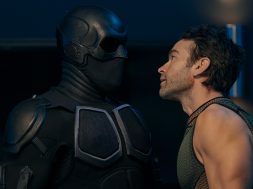


The first trailer has landed for Sgt. Haane, and with it comes the weight of a story New Zealand cinema has never told. One forged in courage, kinship, and an act of battlefield heroism that still echoes more than eighty years later. Set for a nationwide release on April 23, perfectly timed for Anzac Day 2026, the film arrives as both a cinematic event and a long-overdue act of remembrance.
Watch the official trailer for Sgt. Haane below:
Directed by internationally acclaimed filmmaker Tearepa Kahi, Sgt. Haane brings to the screen the extraordinary true story of L. Sgt. Haane Manahi DCM (Te Arawa, Ngāti Raukawa), a soldier of B Company, 28th Māori Battalion, whose actions during the 1943 Battle of Takrouna in Tunisia were described by Lieutenant General Sir Brian Horrocks as “the most gallant feat of arms I witnessed in the course of the war.”
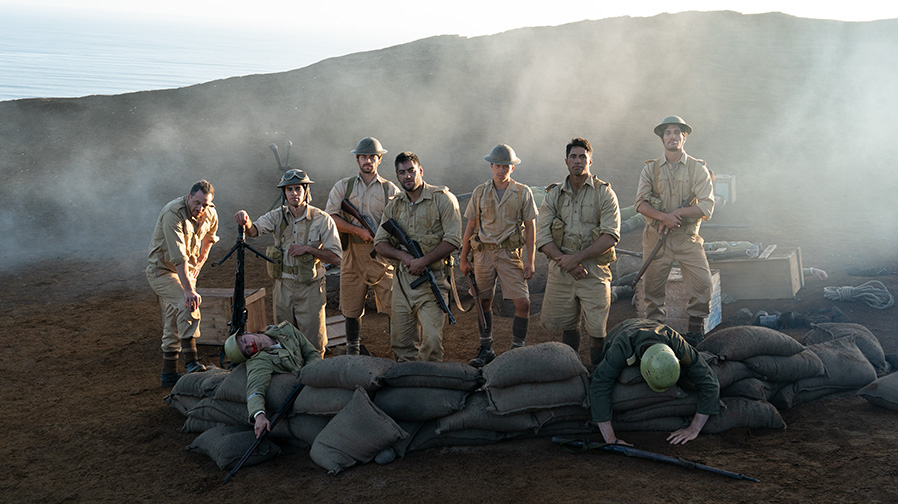
The trailer for Sgt. Haane wastes no time establishing the scale of that feat. At five minutes to midnight on April 19, 1943, Manahi led a small group of B Company soldiers, all cousins, up the sheer limestone face of the Takrouna pinnacle, a natural fortress defended by more than 300 enemy troops. By dawn, after devastating casualties and the collapse of command, Manahi assumed leadership, holding the position through repeated counterattacks and brutal hand-to-hand combat. The victory secured a critical strategic stronghold for the Allied advance, at an almost unimaginable cost.
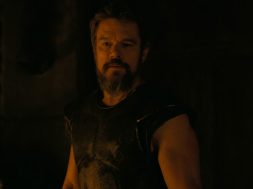
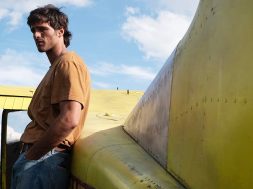
Stepping into the role of Haane Manahi is Alex Tarrant, delivering a performance that the trailer frames as restrained, resolute, and deeply human. He’s joined by a powerful ensemble including Niwa Whatuira, Vinnie Bennett, Matuera Ngaropo and Poroaki Merritt-McDonald as the men who fought alongside him. Their performances are interwoven with the voices of Māori Battalion descendants, grounding the film not just in history, but in living memory.
What immediately sets Sgt. Haane apart is its form. This is not a conventional war film driven purely by spectacle. Kahi moves fluidly between dramatic reconstruction and contemporary reflection, opening in present-day Ōhinemutu, Rotorua, B Company’s homeland, where Manahi’s descendants gather on the eve of Anzac Day. From there, the film journeys back into the dust, blood, and chaos of wartime Tunisia, stitching together archival footage, oral history, and cinematic drama into a single, resonant canvas.
The trailer hints at one of the film’s most striking threads: the connection between Manahi and the people of Takrouna itself. Through the testimony of Nizar Chhoubi, the last remaining resident of the village, the story reveals how Manahi ordered civilians to be sheltered and protected even as fighting raged around them — an act of humanity amid devastation that lingers across generations and borders.
Hovering over the story is a quiet but unresolved injustice. Despite being recommended for the Victoria Cross by three generals and a Field Marshal, Manahi was denied the award by an unnamed member of the British War Office, a decision never explained and never overturned. Yet, as the trailer makes clear, Sgt. Haane is less interested in bureaucratic controversy than in honouring what was actually done, and who stood shoulder to shoulder when it mattered most.
For Kahi, the film is an act of recovery rather than accusation: a reclamation of memory, whakapapa, and shared humanity. The result, judging by this first footage, is a powerful, immersive, and deeply moving piece of New Zealand cinema that reframes heroism not as myth, but as lived experience passed down through families and landscapes.
Sgt. Haane looks poised to stand alongside the most important war films New Zealand cinema has produce; not just as a story of battle and bravery, but as a story of connection, remembrance, and a legacy that refuses to fade, and all can stand in its honour when it arrives in cinemas on April 23.
Image: Rialto Distribution