‘Caterpillar’ – A Tender, Heartbreaking Portrait of Motherhood and Change – Review







There could hardly be a more fitting release for Mother’s Day than Caterpillar, a deeply thoughtful, emotionally rich and profoundly moving cinematic experience from filmmaker Chelsie Preston Crayford. Honest to its core and overflowing with lived-in emotion, Caterpillar examines the lives of three generations of women as they navigate upheaval, grief, identity and transformation, and in doing so delivers a story that feels achingly real in every possible way.
This is the kind of film that settles into your heart slowly and lingers there long after the credits roll. Raw, vulnerable and beautifully observed, Caterpillar is New Zealand cinema at its most intimate, and audiences are going to want to hold this one close, just as tightly as they hold onto the maternal figures in their own lives.
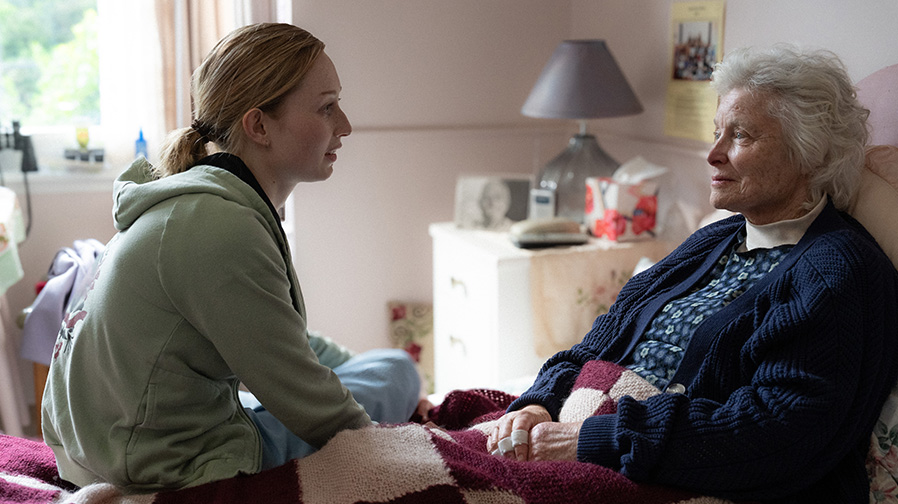
In an early-2000s Wellington household, three generations of women navigate love, ambition and change. Single mother Maxine (Marta Dusseldorp) struggles to fund her filmmaking dreams, and teenage daughter Cassie (Anais Shand) faces the pressures of growing up. All while grandmother Huia (Lisa Harrow) quietly confronts a dementia diagnosis, retreating into her fascination with monarch butterflies as her mind begins to falter. When the family’s needs clash, they must learn to adapt together. Caterpillar marks actor-turned-director Chelsie Preston Crayford’s move into feature filmmaking in this female-led family drama.
A Story of Transformation Across Generations
In her feature film debut, Crayford crafts a deeply personal meditation on womanhood and familial connection, drawing inspiration from her own experiences and the women who shaped her life. What results is a film that feels utterly authentic in its exploration of the emotional complexities that women carry through different stages of life.
At the centre of Caterpillar are three women bound together by love, frustration, memory and pain: grandmother Huia (Lisa Harrow), mother Maxine (Marta Dusseldorp), and teenage daughter Cassie (Anais Shand). Each woman is undergoing a seismic shift in her life, and Crayford carefully threads their stories together into an emotionally layered tapestry about change and self-discovery.
The film’s narrative moves with an intentionally messy and organic rhythm, mirroring the chaos of real family life. Moments of confrontation crash into scenes of tenderness and reflection, while long-held wounds and hidden fears rise to the surface. Yet through all of this emotional turbulence, Caterpillar remains deeply compassionate toward its characters, understanding that womanhood itself is often a constant state of metamorphosis.
Three Extraordinary Performances
Much of the film’s emotional weight rests on the shoulders of Marta Dusseldorp’s Maxine, a struggling independent filmmaker whose sudden opportunity for professional success sends shockwaves through her family. Her announcement that she will be leaving to pursue career ambitions overseas becomes the catalyst for buried tensions and unresolved grief to erupt within the household.
Lisa Harrow delivers devastating work as Huia, whose secret battle with aggressive Alzheimer’s becomes one of the film’s most heartbreaking narrative threads. Harrow captures both the fear and anger that accompany loss of self, and her performance carries an aching emotional honesty that is impossible to shake.
But it is Anais Shand who truly becomes the audience’s emotional anchor. As Cassie, an artistic and emotionally vulnerable teenager wrestling with identity, loneliness and the desperate need for validation, Shand gives a fearless breakout performance. There is something startlingly real about her portrayal, with Shand disappearing entirely into Cassie’s fragile emotional state. Her performance feels open, unguarded and painfully human, and it marks her as a remarkable young talent to watch closely in New Zealand cinema.
A Nostalgic Time Capsule of Early 2000s New Zealand
Beyond its emotional core, Caterpillar also acts as a beautifully rendered snapshot of early 2000s New Zealand life, particularly for millennial audiences who will instantly recognise its textures, fashions, music and atmosphere.
From its evocative vision of Wellington to the inclusion of stellar* on the soundtrack, the film captures a very particular cultural moment with warmth and specificity. It feels like opening an old photo album filled with memories you didn’t realise you still carried.
That nostalgic backdrop adds even greater emotional resonance to the film’s exploration of motherhood and femininity. These women are not abstract figures; they feel lived-in, recognisable and deeply Kiwi, making the film’s emotional climaxes land with even more force.
Chelsie Preston Crayford’s Deeply Personal Vision
What makes Caterpillar so affecting is the unmistakable sense that this story matters profoundly to Crayford herself. Every frame carries emotional intention, and her direction displays remarkable honesty, vulnerability and care.
Rather than offering a polished or sentimentalised portrait of motherhood, Crayford embraces its contradictions: the love, resentment, sacrifice, grief and endurance that can all exist simultaneously within family relationships. In doing so, she creates something that feels deeply reflective of many New Zealand households and the emotional bonds shared between women across generations.
There is extraordinary tenderness in the way Crayford approaches these characters, even in their most difficult moments. She understands that family can wound us deeply while still remaining the place where love is strongest, and Caterpillar captures that emotional duality with rare grace.
Final Verdict: Hold On To Your Mum
As a Mother’s Day cinematic experience, Caterpillar is profoundly moving from beginning to end. Honest, fragile and overflowing with empathy, it is a film about grief, identity, memory and the enduring connection between mothers and daughters.
Chelsie Preston Crayford has delivered a stunning debut feature that speaks directly to the heart, and Caterpillar stands as one of the most emotionally resonant New Zealand films in recent memory. This is not simply a film you watch; it is one you feel deeply. Hold onto this experience, and hold onto the women in your life even tighter afterwards.
Image: MadMan Films