‘House of the Dragon’ – ‘Tumbleton’ – Review






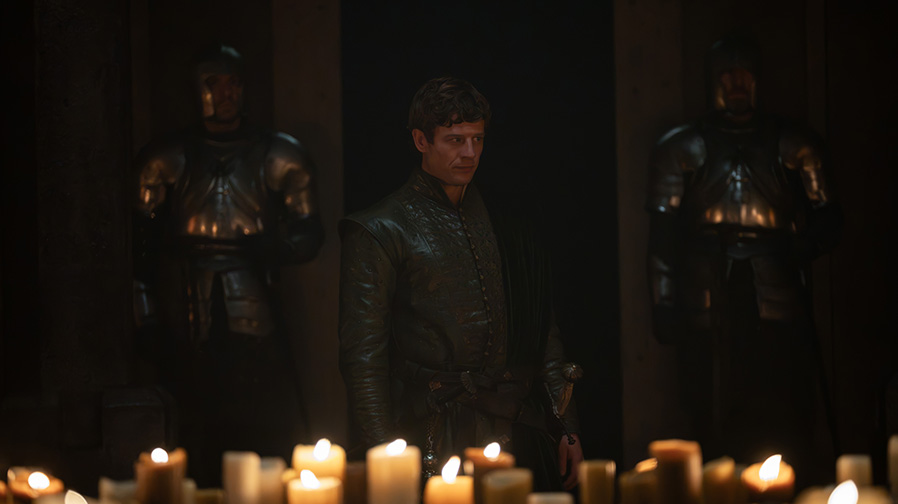
Queen Rhaenyra Targaryen may have claimed the Iron Throne, but Westeros is far from hers to rule. As Episode Three, ‘Rhaenyra Triumphant’, demonstrated, winning the crown was only the beginning. Now, in Episode Four, ‘Tumbleton’, the Greens make their next move as the calculating Lord Ormund Hightower (James Norton) sets an audacious and deeply dangerous plan into motion.
Ormund’s confounding invasion of Tumbleton forces Rhaenyra into a corner. Daemon’s loyalties are tested as Aegon and Larys must find a way to survive the ever-present dangers on the road. In the Riverlands, Coles sets on a course from which there is no return, and Alicent’s situation in the Red Keep becomes more dire.
The Game Changes Again
Week by week, House of the Dragon continues to deepen its political intrigue, and following the introspective drama of ‘Rhaenyra Triumphant’, Episode Four shifts the balance of power once again.
Queen Rhaenyra (Emma D’Arcy) finds herself surrounded by increasingly dangerous forces within King’s Landing. The whispers of dissent grow louder as both the Faith and the smallfolk begin questioning her legitimacy, threatening to undermine her authority before her reign has truly begun. Victory may have secured the throne, but holding it proves an altogether more difficult challenge.
Beyond the capital, an even greater threat quietly gathers strength. Lord Ormund Hightower has established himself within the strategically vital town of Tumbleton, and with careful patience finally unveils the greatest card in his hand, Daeron Targaryen (Benjamin Evan Ainsworth), Alicent Hightower’s youngest son, hidden away under Ormund’s guardianship since childhood.
It is a revelation that dramatically reshapes the political landscape and reminds audiences that the Greens are far from defeated.
Lord Ormund Steps Into The Spotlight
‘Tumbleton’ belongs to James Norton.
While earlier episodes hinted at Ormund’s ambitions, Episode Four finally allows Norton to fully inhabit one of the series’ most compelling new antagonists. Cultured, intelligent and supremely confident, Ormund projects refinement on the surface, yet beneath that polished exterior lies a deeply volatile man whose pride and sense of superiority erupt with terrifying consequences whenever challenged.
Norton crafts a wonderfully Machiavellian figure; a strategist every bit as dangerous as Otto Hightower before him, yet considerably more unpredictable.
Equally fascinating is his deeply unsettling relationship with Daeron Targaryen. Raised entirely under Ormund’s influence, Daeron has grown into a young man who simultaneously reveres and fears his guardian. Their dynamic carries an uncomfortable emotional weight, portraying a lifetime of manipulation disguised as paternal affection.
As Ormund’s long game begins taking shape, audiences quickly realise he is every bit a student of the Game of Thrones. His brutal philosophy of justice, rooted firmly in vengeance and retribution, fuels some of the episode’s most shocking acts of violence and establishes him as one of the season’s most dangerous players.
A Fallen King’s Humiliation
While Ormund rises, King Aegon II Targaryen continues his long and painful descent.
Now horrifically scarred and physically broken, Tom Glynn-Carney’s fallen king wanders the ruins of Rook’s Rest alongside the ever-calculating Larys Strong (Matthew Needham), reduced to little more than a shadow of the man who once wore the crown.
Claire Kilner uses these sequences to powerful effect, illustrating how quickly power can disappear within Westeros. Aegon’s suffering strips away every illusion of royal privilege, leaving audiences to witness the brutal consequences of ambition when fate turns against its chosen ruler.
Shadows Over Harrenhal
‘Tumbleton’ also returns audiences to Harrenhal, where Ser Criston Cole (Fabien Frankel), Ser Gwayne Hightower (Freddie Fox) and the battered Green host arrive expecting to find Prince Aemond Targaryen waiting for them.
Instead, Harrenhal stands eerily empty.
Their only welcome comes from the enigmatic Alys Rivers (Gayle Rankin), whose cryptic guidance offers few answers while quietly steering Criston toward an altogether darker purpose.
Ever since the catastrophe at Rook’s Rest, Criston has become consumed by nihilism. His belief in glory has evaporated, replaced by bitterness and resignation. Frankel delivers perhaps his strongest material yet as Cole embraces increasingly ruthless methods, abandoning conventional warfare in favour of brutal guerrilla tactics designed to bleed the Riverlords dry.It is the portrait of a man who has lost faith in everything except destruction.
Dangerous Truths
Meanwhile, Prince Daemon Targaryen (Matt Smith) journeys into the Vale, where an unexpected revelation concerning the Battle of the Gullet forces him to confront uncomfortable truths.
What he learns fundamentally reshapes his understanding of the war and compels him to question where his loyalties truly lie. It is a quietly powerful character moment that suggests Daemon’s greatest battle may no longer be fought with dragonfire or Valyrian steel, but within his own conscience.
Smith once again brings tremendous gravitas to the role, allowing subtle emotional conflict to simmer beneath Daemon’s famously stoic exterior.
Final Verdict: Rearranging The Board
‘Tumbleton’ carefully resets the board for the next phase of House of the Dragon. While it lacks the explosive spectacle of earlier episodes, it more than compensates through razor-sharp political manoeuvring, outstanding performances and an ever-present sense of impending catastrophe.
Most importantly, the episode reminds audiences never to become too comfortable. Just when victory appears secure, the balance of power shifts once more.
With the Hightowers finally ready to unleash their own fire upon Westeros, the Dance of the Dragons is entering an even darker and more unpredictable chapter.
House of the Dragon is streaming now on HBO MAX.
Image: HBO MAX