’28 Years Later: The Bone Temple’ – Review





The bleak future of Britain in 28 Years Later may be ruled by the infected, but it’s the fractured, feral remnants of humanity that deliver the franchise’s most chilling horrors. That truth is driven home, brutally and without mercy, in 28 Years Later: The Bone Temple, the much-anticipated sequel to Danny Boyle’s ferocious return to his iconic universe. Under the bold direction of Nia DaCosta, this new chapter emerges as the first true horror knockout of 2026; and it’s a gnarly, nerve-shredding experience.
Where zombies once defined the terror, The Bone Temple dares to ask a far more disturbing question: what if what survived the apocalypse was worse than the plague itself?
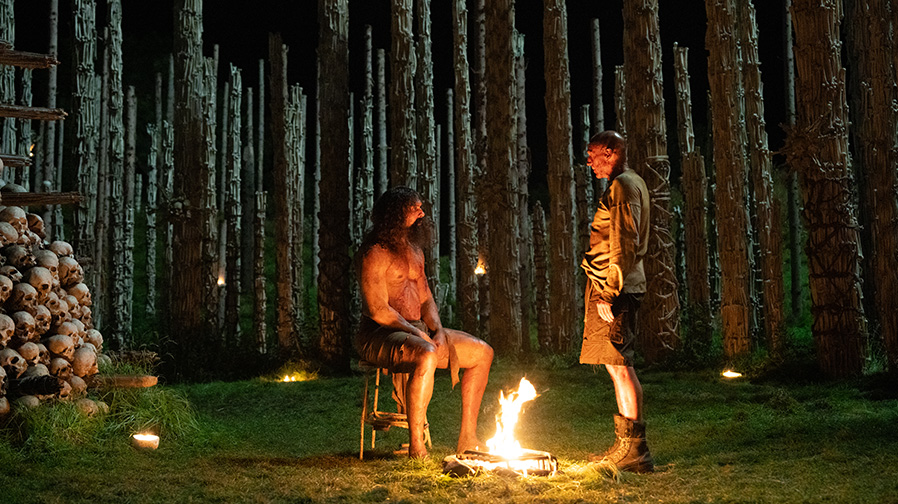
Expanding upon the world created by Danny Boyle and Alex Garland in 28 YEARS LATER – but turning that world on its head – Nia DaCosta directs 28 YEARS LATER: THE BONE TEMPLE. In a continuation of the epic story, Dr. Kelson (Ralph Fiennes) finds himself in a shocking new relationship – with consequences that could change the world as they know it – and Spike’s (Alfie Williams) encounter with Jimmy Crystal (Jack O’Connell) becomes a nightmare he can’t escape. In the world of THE BONE TEMPLE, the infected are no longer the greatest threat to survival – the inhumanity of the survivors can be stranger and more terrifying.
A New Vision of the Rage
When 28 Years Later exploded into cinemas in 2025, it did so with punk-rock ferocity, reigniting the franchise with blood, rage, and furious energy. Its closing moments delivered a jaw-dropping revelation: the arrival of the sadistic and unhinged Sir Lord Jimmy Crystal, played with chilling presence by Jack O’Connell. That final image promised madness to come, and The Bone Temple fulfils that promise in spectacularly unsettling fashion.
Handing the reins to Nia DaCosta proves to be a masterstroke. Rather than simply escalating the infected threat, DaCosta pivots the series in a bold and radical direction. The Bone Temple steps away from the relentless presence of the Rage virus and instead focuses on the moral decay of what remains of humanity. The infected may ravage the countryside, but it’s mankind’s twisted belief systems, cult mentalities, and capacity for cruelty that form the film’s true horror.
This is a grim, suffocating study of evil — one that crawls under the skin and stays there.
A Spark of Humanity Left Behind – Dr. Ian Kelson
DaCosta reframes the narrative by shifting perspective. While Spike remains present as an observer, the emotional and thematic core of the film rests with Dr. Ian Kelson, portrayed with haunting restraint by Ralph Fiennes. Kelson is a strange, weathered figure; a man clinging desperately to purpose in a world that has abandoned reason.
Still bound by his Hippocratic Oath, Kelson serves as a keeper of the dead, attempting to preserve dignity and meaning in the ruins. Fiennes delivers a quietly devastating performance, filled with vulnerability and moral exhaustion. His portrayal evolves in unexpected ways, revealing layers that transform Kelson from an apparent eccentric into something far more complex and tragic.
Through Kelson, The Bone Temple explores the notion of goodness as resistance — the idea that choosing compassion in a lawless world is itself an act of defiance. It’s thoughtful, unsettling, and deeply human.
Enter the Devil – Sir Lord Jimmy Crystal
Standing in stark opposition to Kelson’s fragile morality is one of the most disturbing villains modern horror has produced.
Jack O’Connell’s Sir Lord Jimmy Crystal is pure nightmare fuel.
Now serving as Spike’s grotesque “guardian,” Jimmy is the self-anointed ruler of a roaming cult: ‘The Jimmy’s’; a warped, Jimmy Savile–esque sect built on distorted faith, cruelty, and sadistic ritual. He wanders his self-proclaimed kingdom dispensing “charity” through violence, communing with the imagined spirit of his father, Old Nick, and enforcing his own twisted version of salvation.
O’Connell delivers a performance soaked in menace. His Jimmy is unpredictable, theatrical, vicious, and terrifyingly charismatic. Every scene he inhabits feels volatile, as though violence could erupt at any moment. And yet, DaCosta refuses to let him remain a simple monster. In a shocking third-act turn, Jimmy is taken somewhere deeply unexpected, resulting in one of the film’s most jaw-dropping revelations.
Sir Lord Jimmy Crystal feels destined to become an icon of 21st-century horror — a villain whose shadow will loom over the genre for years to come.
Horror Without a Safety Net
28 Years Later: The Bone Temple is a film that thrives on risk. DaCosta throws convention out the window, embracing the bizarre, the grotesque, and the outright deranged. You never quite know where the film is heading, and that unpredictability is its greatest strength.
The horror sequences are vicious, intimate, and genuinely upsetting, eschewing cheap shocks in favour of sustained dread. Violence is not stylised; it’s cruel, ugly, and purposeful. But the film balances its brutality with philosophical depth, interrogating free will, belief, and the thin line between faith and fanaticism.
Shocks arrive without warning. Revelations hit like blunt force trauma. And the film’s final moments lay chilling groundwork for the future of this ravaged world — one that suggests the worst may still be ahead.
The Final Verdict
28 Years Later: The Bone Temple launches 2026 with a ferocious statement of intent. It’s bold, confrontational, and deeply unsettling — a horror film unafraid to challenge its audience and its own legacy. By turning its gaze inward, away from the infected and toward humanity’s darkest instincts, the franchise finds terrifying new life.
Image: Sony Pictures