‘I’m Still Here’ – Review







Celebrated filmmaker Walter Salles has a style and substance all his own and he finds incredibly poignant ground to deliver another triumphantly moving drama with I’m Still Here, which leaves its touch upon an audiences heart.
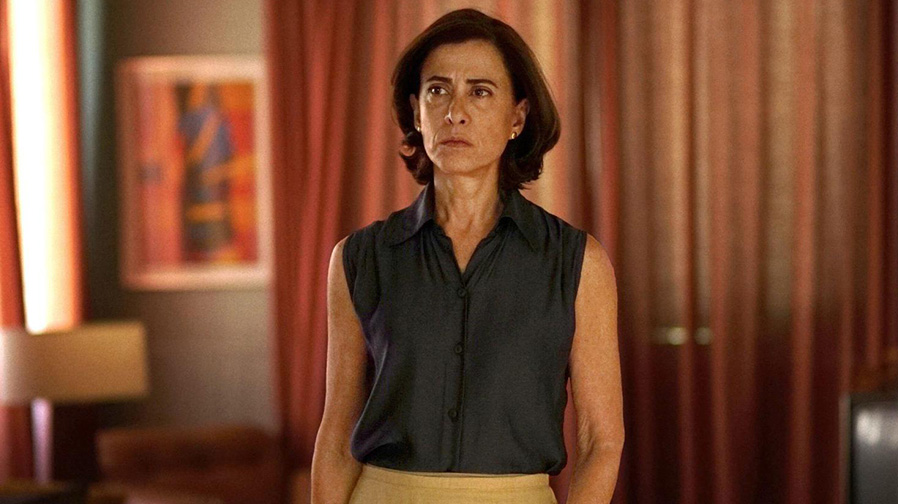
Eunice Paiva (Fernanda Torres) begins a lonely battle to learn the truth behind the disappearance of her husband, former PTB deputy Rubens Paiva (Selton Mello), while trying to keep her family together.
Walter Salles is a filmmaker with a singular and concise voice, and he delivers an incredibly impassioned piece of cinemas to audiences with I’m Still Here, which documents the true life story of Eunice Pavia, a decorated human riughts lawyer, and her struggle to bring justice to life in the aftermath of Brazil’s tumultuous past, and this film is dedicated example of resilience amidst oppression. Set against the backdrop of the 1970s military dictatorship, the film masterfully intertwines personal and political narratives, delivering a story that’s both intimate and universally resonant.
At the center of this narrative is the Paiva family, led by the charismatic Rubens Paiva (Selton Mello), a former congressman with unwavering ideals, and his steadfast wife, Eunice (Fernanda Torres). Their idyllic life in Rio de Janeiro, filled with sunlit beach outings and familial warmth, is abruptly shattered when Rubens is forcibly taken by the regime’s agents, leaving Eunice to navigate the treacherous waters of uncertainty and fear.
Fernanda Torres delivers a tour de force performance as Eunice, capturing the essence of a woman torn between despair and determination. Her portrayal is both raw and nuanced, embodying the silent strength required to hold her family together while confronting an oppressive system. You see her undergo every flavour of emotion from blissful joy to heartwrenching terror to stifling sadness and a journey back to hope as she undergoes an incredible gauntlet of pain suffering at the loss of her great love, but who through it never lost her resilience as a mother and who would fight for justice till the very end. Torres performance is utterly brilliant, and her depiction of the very essence of a mother will fill your heart up with emotion and love for this incredible woman.Selton Mello complements her with a compelling depiction of Rubens, whose absence is palpably felt throughout the film, serving as a haunting reminder of the countless “disappeared” individuals during that era.
Salles’s direction is both sensitive and unflinching, shedding light on the personal toll of political turmoil. Drawing from his own connections to the era, he crafts a narrative that’s rich in authenticity and emotional depth. The use of archival footage seamlessly blended with the film’s cinematography enhances the storytelling, grounding the fictional portrayal in stark reality. The film’s pacing is deliberate, allowing audiences to fully immerse themselves in the Paiva family’s journey. Moments of silence speak volumes, and the meticulous attention to detail, from the period – accurate settings to the evocative musical score, all of it helps to transport viewers to a time fraught with tension and uncertainty.
I’m Still Here doesn’t merely recount historical events; it resonates profoundly with contemporary audiences, drawing parallels between past and present struggles for justice and human rights. The film’s title serves as a powerful declaration of existence and defiance, echoing the sentiments of those who refuse to be silenced. The supporting cast, including the talented ensemble portraying the Paiva children, adds depth to the narrative, showcasing the varied ways individuals cope with collective trauma. Their performances underscore the enduring impact of political repression on families and communities.
I’m Still Here is more than a historical drama; it’s a cinematic ode to resilience, love, and the unyielding pursuit of truth. Walter Salles has crafted a masterpiece that not only honours the memory of those lost during one of Brazil’s darkest periods but also serves as a beacon of hope and a reminder of the enduring power of the human spirit.
Image: Sony Pictures