‘The History of Sound’ – Review


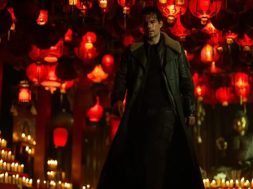




Filmmaker Oliver Hermanus firmly cemented his talent with 2022’s Living, an intimate, emotionally resonant masterpiece led by Bill Nighy that quietly emerged as one of the decade’s defining pieces of cinema. It was sincere, deeply human, and profoundly warm: an exploration of life’s small miracles that lingered long after the credits. Now, Hermanus returns with The History of Sound, a tender, meditative historical romance that’s every bit as moving, delicate and soul-stirring. It is, quite simply, one of the most beautiful films you will see this year; an extraordinary piece of cinema defined by sincerity, emotional precision, and heartfelt depth.
Lionel Worthing (Mescal) is a talented singer from rural Kentucky raised on the songs his father would sing on the front porch. In 1917, he leaves his family farm to attend the Boston Music Conservatory. There he meets David White (O’Connor), a charming music composing student who is soon drafted into the end of the war. In 1920, the two spend a winter walking through the forests and islands of Maine, collecting folk songs in order to preserve them for future generations. Lionel drifts through Europe in his twenties and thirties, building a new life of profound success and happiness, and experiencing new loves. Yet he is constantly drawn back to memories of his brief time with David, trying to understand the impact of their relationship. Eventually, a reminder of their work together reveals why their connection rang loudest.
Adapted from Ben Shattuck’s acclaimed short story, The History of Sound is a quiet yet sweeping journey through devotion, identity, and the fragile, intangible moments that define our connections to others. Hermanus, now fully in command of his creative voice, crafts a drama rich with subtle emotion and inward reflection, his signature style on full display in a film that is soft-spoken but searing in its impact. Set against the backdrop of early twentieth-century America, the film follows two gifted young musicians, Lionel Worthing (Paul Mescal) and David White (Josh O’Connor), who meet at the Boston Conservatory in 1917. Their instant attraction ignites a bond that becomes the defining relationship of their lives: tender, complicated, and laden with the quiet tragedies that time so often brings.
The narrative may appear simple on its surface, but beneath it lies a complex, layered exploration of love’s rhythm, how it grows, fractures, heals, and sometimes haunts. Hermanus builds this story slowly, warmly, letting its emotional power settle in gently. Scene by scene, the film becomes a cocoon of delicate feeling, and by the time its final moments unfold, it is almost impossible not to be moved to tears.
Hermanus has a gift for revealing emotion through the quietest gestures, and The History of Sound is a masterclass in that craft. This is not a romance of sweeping declarations or dramatic confrontations. Instead, it thrives on the smallest, most human moments – the brush of an arm, a lingering glance, a shared piece of music, or the stillness of two bodies feeling the weight of unspoken truths.
As Lionel and David travel across rural America in 1919 to document and preserve the country’s folk songs, their relationship deepens in ways both tender and tumultuous. The further they journey, the more the film transforms into something intimate and melancholy—a meditation on how love evolves and how memory can become both a comfort and a burden. Hermanus lets the emotions simmer, inviting the audience to lean in, listen, and feel the emotional undercurrents thrumming beneath every scene.
As Lionel Worthing, Paul Mescal delivers what may be the most affecting performance of his career. Lionel is shy, deeply introspective, and profoundly shaped by loss and longing. Mescal plays him with a soft, textured vulnerability; open yet restrained, haunted yet hopeful. His emotional honesty is staggering, and the depth he brings to Lionel makes the character unforgettable.
Opposite him, Josh O’Connor is magnetic as David White; a character full of contradictions. David is charming, privileged, expressive, but also prone to insecurity, jealousy, and emotional volatility. O’Connor’s nuanced performance beautifully complements Mescal’s more internal work, creating a dynamic that is rich, real, and at times explosively raw. Together, they form a romantic pairing of remarkable sincerity and power.
Visually, The History of Sound is stunning. Cinematographer Alexan Dynan frames the American landscape in a palette of autumnal greens, browns and golds, evoking the textures of an Andrew Wyeth painting: earthy, tender, and faintly haunted. Each frame feels composed with reverence for natural light and the quiet poetry of the outdoors. The use of traditional American folk ballads enriches the film’s emotional tapestry, grounding Lionel and David’s love story in a musical heritage that feels lived-in and authentic. It’s cinema as sensory experience — intimate, tactile, and profoundly human.
With The History of Sound, Oliver Hermanus delivers one of the year’s most moving, sincere, and heartbreakingly beautiful films. It is a story of love’s echoes; how they shape us, sustain us, and sometimes define our very existence. Its emotional weight lingers long after the screen fades to black, inviting reflection and stirring the heart.
This is a picture of true cinematic grace, crafted with tenderness and depth, and it deserves to be seen on the biggest screen possible. A masterpiece of quiet emotion, The History of Sound is simply unforgettable.
Image: Universal Pictures