‘The Death of Robin Hood’ – Hugh Jackman Delivers a Haunting Farewell to a Legend – Review




What are heroes if not myths? Stories shaped by time, embellished through generations, and transformed into something greater than the flawed individuals who inspired them.
That question lies at the heart of director Michael Sarnoski’s brooding and deeply affecting The Death of Robin Hood, a daring reimagining of one of history’s most enduring folk legends. There are no Merry Men here. No Sherwood Forest. No romantic adventures with Maid Marian. Instead, Sarnoski strips away centuries of folklore to reveal something far more unsettling: the story of a violent, broken man confronting the consequences of a lifetime of bloodshed.
The result is an absorbing, harrowing, and utterly transcendent piece of cinema.
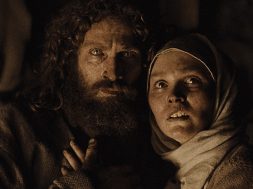
Gravely wounded and hunted by enemies old and new, an ageing Robin Hood (Hugh Jackman) finds refuge within a remote religious community, where he is nursed back to health by Sister Brigid (Jodie Comer), a compassionate prioress who forces him to confront the darkness of his past.
Michael Sarnoski’s Visionary Reinvention
With Pig, Michael Sarnoski established himself as one of modern cinema’s most thoughtful storytellers, crafting intimate narratives that explore grief, identity, and redemption. He later proved his blockbuster credentials with A Quiet Place: Day One, but with The Death of Robin Hood, he delivers perhaps his most ambitious work yet.
Drawing inspiration from the medieval tale Robin Hood’s Death or Robin Hoode his Death, Sarnoski transports audiences to the rugged Celtic borderlands of 1247 AD and offers a version of Robin Hood unlike any seen before. This Robin is not a noble outlaw fighting injustice. He is a predator, a brigand, and a man haunted by the devastation he has left behind.
What unfolds is less an adventure than a reckoning. Sarnoski uses the legend as a vehicle to explore mortality, guilt, redemption, and the stories humanity creates to soften uncomfortable truths. The film unfolds with a hypnotic intensity that steadily tightens its grip, drawing audiences deeper into its melancholy and moral complexity.
A World Built from Mud, Blood and Faith
One of the film’s greatest achievements is its extraordinary sense of place.
This is not the romanticised medieval England of popular imagination. Instead, Sarnoski and cinematographer Pat Scola immerse viewers in a harsh, rain-soaked world of mud, stone, smoke, and violence. Every frame feels tangible and lived-in, creating an atmosphere that is both brutal and authentic.
The film’s visual language evolves alongside Robin’s journey. The opening chapters are dominated by earthy tones, shadowy forests, and flickering firelight that reflect his savage existence. Later, as the story moves to the Abbey of St Clement, cooler palettes and luminous whites introduce a sense of spiritual possibility and redemption.
Every texture, costume, and location feels handcrafted, reinforcing the emotional weight of the story and grounding its mythic themes in a stark human reality.
Hugh Jackman’s Finest Performance Yet
Modern audiences largely associate Hugh Jackman with heroism. After all, few actors have had a greater impact on contemporary cinematic heroes than his iconic portrayal of Wolverine.
Here, however, Jackman does something entirely different.
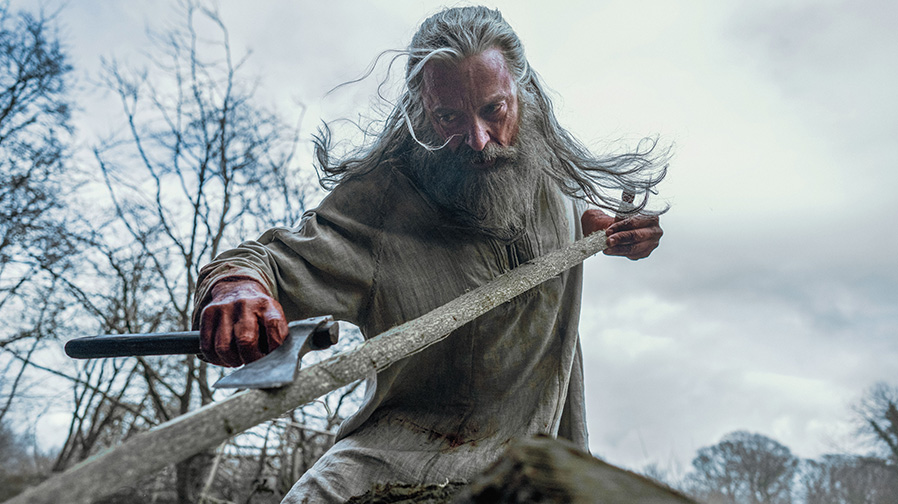
Anyone expecting a medieval variation of Logan may be surprised. His Robin Hood is not a weary hero but a deeply flawed and brutal beast of a man whose legend has obscured a lifetime of cruelty. Once a nobleman, Robin has become consumed by greed, violence, and selfish ambition. He robbed indiscriminately, killed without hesitation, and revelled in his own brutality. Now, facing the twilight of his life, he is forced to reckon with the damage he has inflicted.
Jackman delivers a remarkably restrained and introspective performance. Speaking little but communicating volumes through expression and physicality, he appears as a wolf-like presence, haunting and always scanning the horizon with the eyes of a hunter, and the instincts of a predator, but his portrayal leans into a man wrestling with guilt, regret, and the possibility of redemption. As Robin’s relationships, with his charge, Little Margaret, and Sister Brigid deepen, Jackman gradually peels back the armour surrounding his character, revealing unexpected vulnerability beneath decades of violence.
It is a layered, emotionally devastating performance and arguably one of the finest of his career.
Jodie Comer Shines as the Film’s Moral Compass
Counterbalancing Robin’s darkness is Jodie Comer, who is exceptional as Sister Brigid.
While echoes of Maid Marian linger within the character, Brigid is far more than a romantic counterpart. She is a healer, a woman of faith, and one of the few genuinely compassionate figures inhabiting this unforgiving world. Yet she is also burdened by her own secrets and uncertainties.
Comer imbues the role with extraordinary grace and emotional intelligence. There is an almost ethereal quality to her performance, but beneath that serenity lies a powerful inner strength. As Brigid’s beliefs are tested and her connection to Robin deepens, Comer delivers some of the film’s most emotionally charged moments.
Together, she and Jackman create a compelling dynamic that becomes the emotional core of the narrative.
A Visceral and Emotional Experience
The Death of Robin Hood unfolds in two distinct movements.
The first is a brutal descent into chaos, filled with savage violence and primal conflict. Battles are ugly, desperate affairs where bones break, blood spills, and survival comes at a terrible cost. Sarnoski refuses to romanticise violence, presenting it with shocking immediacy and visceral impact.
The second half shifts into a more contemplative register as Robin seeks refuge within the Priory of St Clement. Yet even amid its tranquillity, danger remains ever-present. The threat of violence hangs over every scene, heightening the emotional stakes and driving the story toward its heartbreaking conclusion.
The film’s final act is nothing short of devastating. As questions of legacy, redemption, faith, and myth converge, audiences are likely to find themselves fighting back tears as Robin’s story reaches its inevitable end.
Final Verdict: A Myth Stripped Bare
The Death of Robin Hood is a bold, uncompromising reimagining of one of history’s most celebrated legends. Michael Sarnoski strips away centuries of romanticism to uncover the flawed man beneath the myth, crafting a profound meditation on redemption, mortality, and the stories we tell about ourselves.
Anchored by career-best work from Hugh Jackman and a luminous performance from Jodie Comer, this is a raw, haunting, and deeply moving cinematic experience.
By the time the credits roll, audiences won’t simply have witnessed the death of Robin Hood; they’ll have witnessed the birth of the true legend.
Image: MadMan Films/A24